Researcher Team:
- Nursanti Novi Arisa S.Kom., M.Kom. (Sistem Informasi/JTEIB/ITK)
- Zahwa Hanna Dwi Putri (Sistem Informasi/JTEIB/ITK)
- Cantika Ade Qutnindra Maharani (Sistem Informasi/JTEIB/ITK)
- Desnita Dwi Putri (Sistem Informasi/JTEIB/ITK)
- Muhammad Aqila Ardhi (Sistem Informasi/JTEIB/ITK)
- Risky Nur Fatimah Bahar (Sistem Informasi/JTEIB/ITK)
- Verina Rahma Dinah (Sistem Informasi/JTEIB/ITK)
- Alif Zhalifunnas (Teknologi Pangan/JRI/ITK)
- Risma Rahmawati (Teknologi Pangan/JRI/ITK)
- Tharwa Khalid Diputra (Teknologi Pangan/JRI/ITK)
Title of the Article:
To Make the Most of the Grant, the ITK Team Teaches the Balikpapan Aneka Tani Group How to Make Fruit Chips
Year of Community Service:
2026
Benefits :
- To enhance the knowledge and understanding of members of the Aneka Tani Group at KM 24 regarding fruit chip processing technology using slicers, spinners, and vacuum fryers.
- To provide operational guidelines by developing Standard Operating Procedures (SOPs) for each machine, SOPs for the production process, and an operational manual to serve as a reference for conducting the production process safely and efficiently.
- To raise public awareness of the importance of implementing pre-treatment, following proper production procedures, and evaluating machine condition in order to maintain product quality and workplace safety.
- To serve as a reference for future community service activities in the application of appropriate technology in the agricultural product processing sector, with a focus on community empowerment.
Description :
The Aneka Tani Farmers’ Group at KM 24 in North Balikpapan is one of the community groups with the potential to develop processed fruit products into items with higher economic value. The group already has processing equipment—including a slicer, a spinner, and a vacuum fryer—provided by the government to support the production of fruit chips. However, based on preliminary observations conducted by the INSOS Team at the Kalimantan Institute of Technology, the machine is not yet being used to its full potential due to the community’s limited knowledge of the machine’s functions, how to operate it, and the production process, as well as the lack of operational guidelines to serve as a reference for using the machine. These conditions have led to the machinery being underutilized, so the potential for developing processed agricultural products has not yet been maximized.
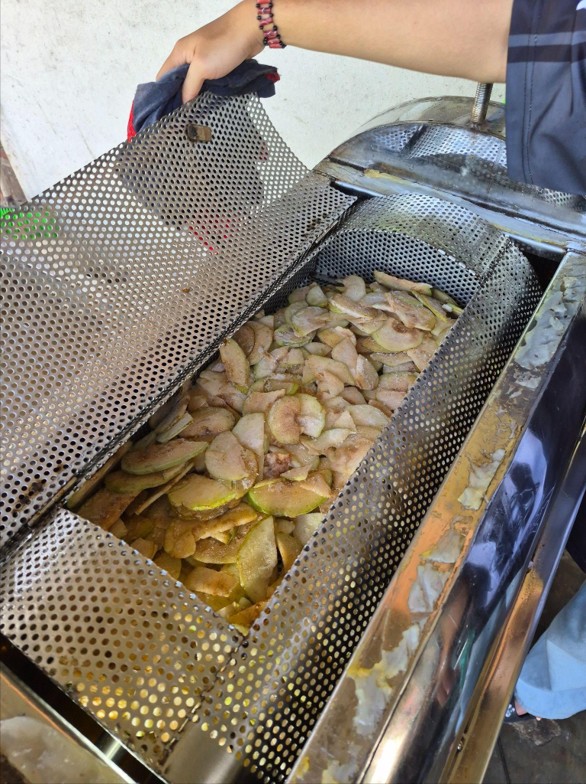
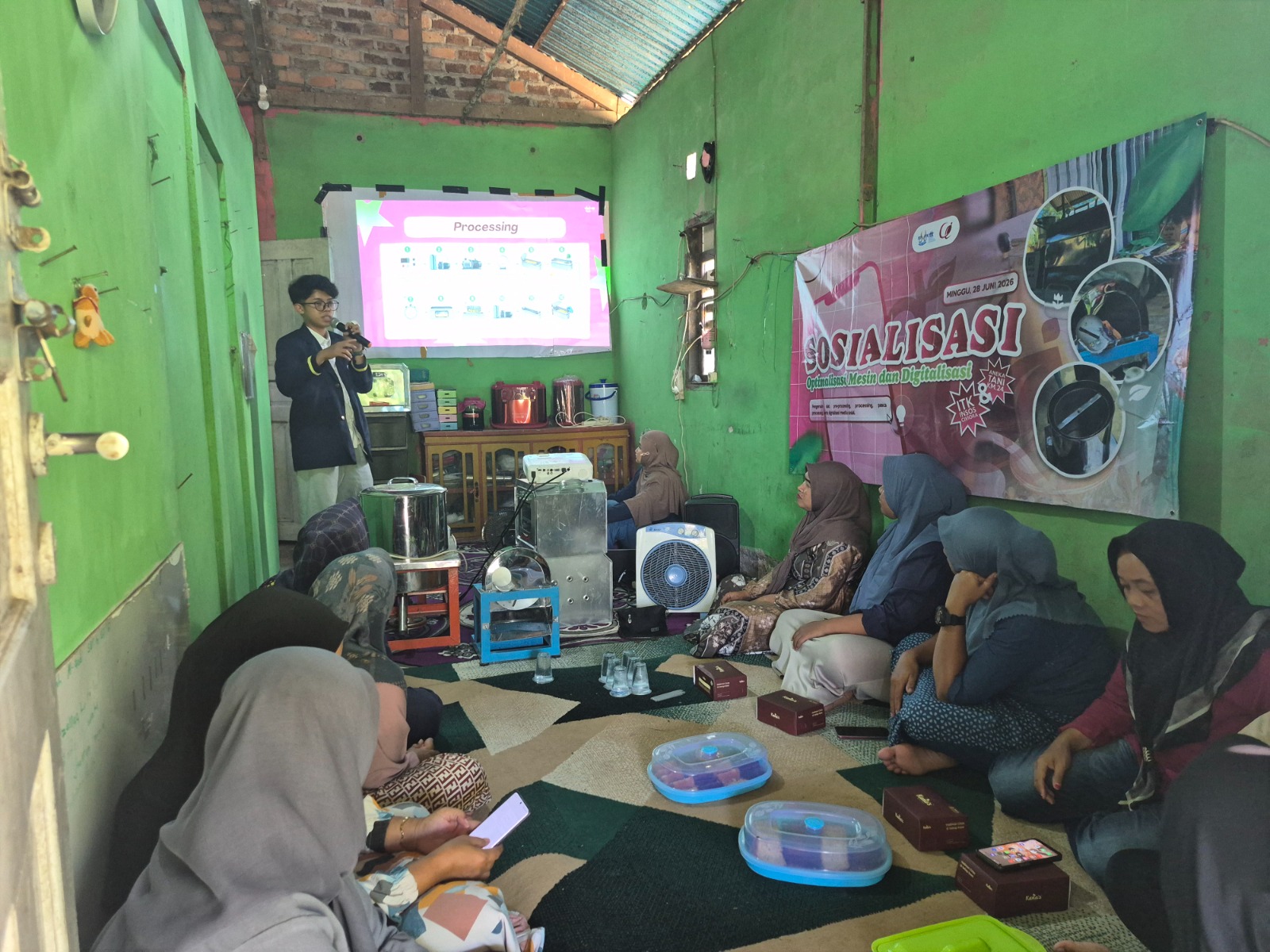
In response to this issue, the INSOS Team—comprising students from the Information Systems and Food Technology programs and led by Ms. Nursanti—carried out a community service initiative through outreach and education on fruit chip processing technology using processing machinery. The material covered included an introduction to the functions and components of slicers, spinners, and vacuum fryers; an explanation of how each machine works; the stages of fruit chip processing; the pre-treatment process for raw materials prior to frying; a presentation of the results of production trials conducted by the team; an evaluation of the production process; and a presentation of the audit results regarding the condition of the partner’s vacuum fryer. This activity was conducted interactively through presentations, demonstrations, discussions, and question-and-answer sessions, so that participants not only gained theoretical knowledge but also gained a hands-on understanding of how to apply processing technologies. It should be emphasized that the primary focus of this program is not to design or develop new appropriate technologies, but rather to guide and encourage participants to improve their skills in making the most of the tools they already possess.
To support the program’s sustainability and the implementation of existing technologies, the team developed several deliverables that partners can utilize once the outreach activities are completed. These deliverables include Standard Operating Procedures (SOPs) for operating each machine, SOPs for the fruit chip production process, and an operational manual as a self-learning resource. All deliverables were developed based on field observations, machine condition audits, and the team’s experience during production process trials, ensuring that the material provided aligns with the real-world conditions faced by the partners.
Through this outreach activity, it is hoped that members of the Aneka Tani Group at KM 24 in North Balikpapan will gain a better understanding of the use of fruit chip processing technology. In addition to enhancing human resource capacity, this activity is also expected to promote the optimal use of government-provided machinery, improve the quality of the production process, and strengthen the sustainability of agricultural product processing businesses based on appropriate technology within the community.
Documentation:
(1) Documentation of observations and audits of machine condition
.jpg)
(2) Documentation of outreach and educational activities for members of the Aneka Tani Group at KM 24, North Balikpapan
.jpg)
(3) Machine Usage Documentation